
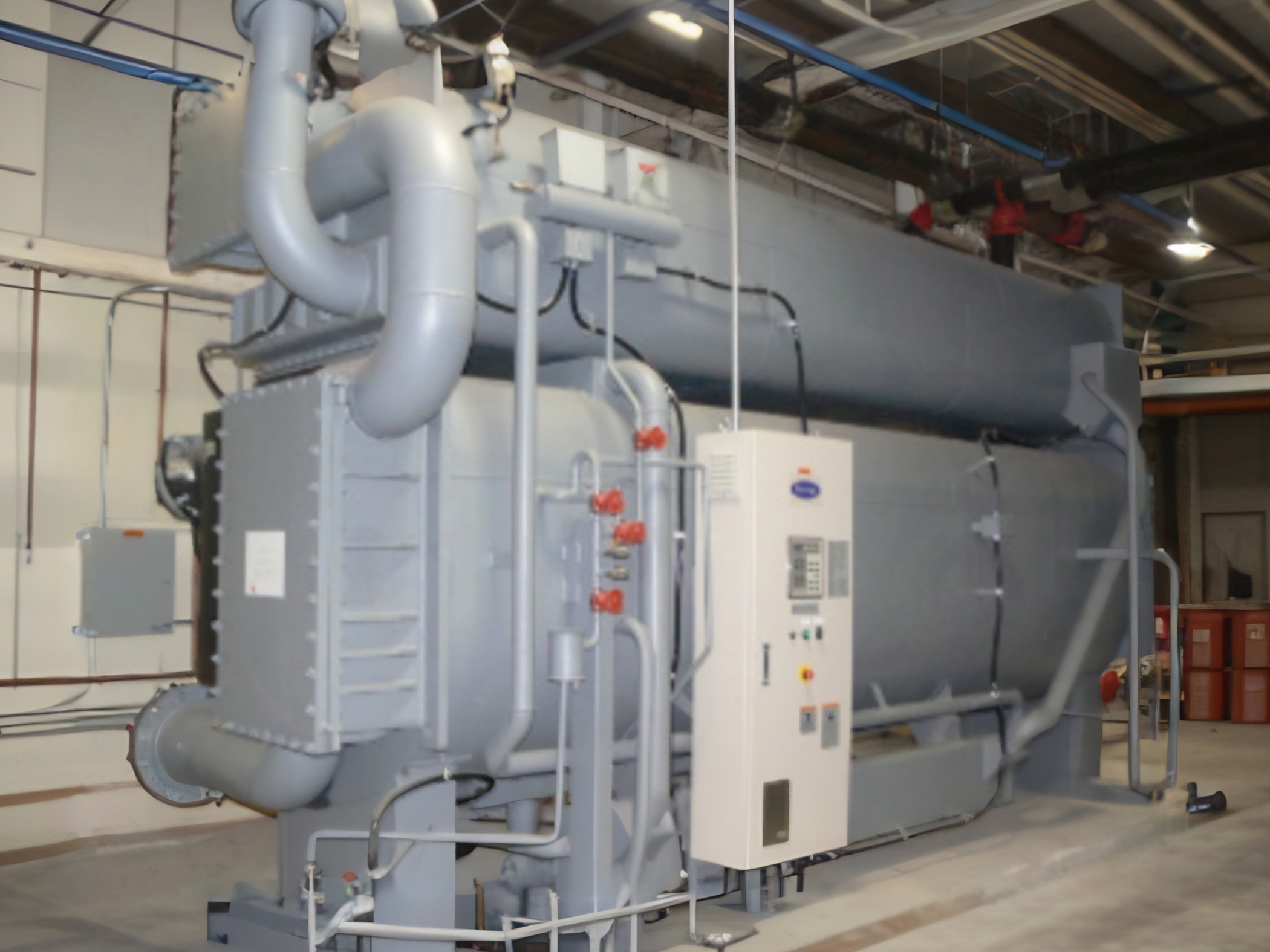
Absorption chillers are becoming the cooling system of choice for a variety of facilities. Among the many advantages of natural gas-fueled absorption chillers are lower operating costs through reductions in electric peak demand charges, the elimination of harmful refrigerants and fewer greenhouse gas emissions. Here, we'll look at how absorption chillers work and how to properly maintain them for peak performance.
How absorption chillers work
Absorption chillers use heat — typically in the form of steam, hot water or through the direct combustion of natural gas — to provide cooling. An absorption chiller contains a thermal compressor system consisting of an absorber, a generator and a small pump. It also includes a condenser and an evaporator.
In an absorption chiller, the refrigerant is water, which is evaporated under a partial vacuum to produce chilled water. The water vapor is absorbed by either an ammonia or lithium bromide solution and then separated in the generator. The water vapor is condensed back into liquid and returned to the evaporator.
Solving common maintenance issues
Although absorption chillers have fewer moving parts than electrical models, they still require maintenance to ensure performance. Here are eight common maintenance issues and how to solve them.
1. Scaling. Mineral deposits from hard water can accumulate on heat exchanger tubes, reducing heat transfer efficiency. To control mineral content, implement a water treatment program, including regular descaling. Use softened or treated water in the cooling system.
2. Refrigerant loss. Loss of refrigerant — water in lithium bromide or ammonia-water solution in ammonia systems — can lead to lower cooling capacity. Identify leaks from seals, fittings or tubing and repair them. Refill the system to the recommended level.
3. Crystallization. The lithium bromide solution can crystallize due to improper temperature control, blocking flow and damaging components. Shut down the system and gradually reheat it to dissolve crystals. There is no crystallization in ammonia systems.
4. Air leaks. Absorption chillers operate under vacuum, and air intrusion can degrade efficiency. Perform regular leak tests using ultrasonic detectors or vacuum test equipment. Repair leaks by sealing fittings, valves or joints.
5. Corrosion. Internal components corrode when oxygen or impurities are present in the lithium bromide solution. To minimize corrosion, add chemical inhibitors to the solution. Repair or replace severely corroded components.
6. Sensor malfunction. Faulty temperature, pressure or flow sensors can provide inaccurate readings and disrupt operations. Inspect and test sensors regularly, keep sensor components clean and free of deposits and calibrate or replace malfunctioning sensors.
7. Solution contamination. The lithium bromide solution can become degraded over time due to contamination or chemical breakdown, as well as ammonia concentration in ammonia-water systems. Regularly test solution concentration and quality and replenish it by adding fresh lithium bromide and inhibitors. If not properly maintained, trapped liquids in ammonia systems can expand and cause ruptures.
8. Pump problems. Wear and tear on solution and refrigerant pump components can cause poor circulation and reduce overall system performance. Conduct regular performance tests and replace aging parts, such as worn-out seals, bearings and impellers.
Regular maintenance is key to keeping absorption chillers running smoothly. By addressing these common issues and implementing preventive measures, you can improve your system's reliability and efficiency and increase its lifespan.
Image: U.S. Department of Energy. Onsite Energy Technical Assistance Partnerships (TAPs)