
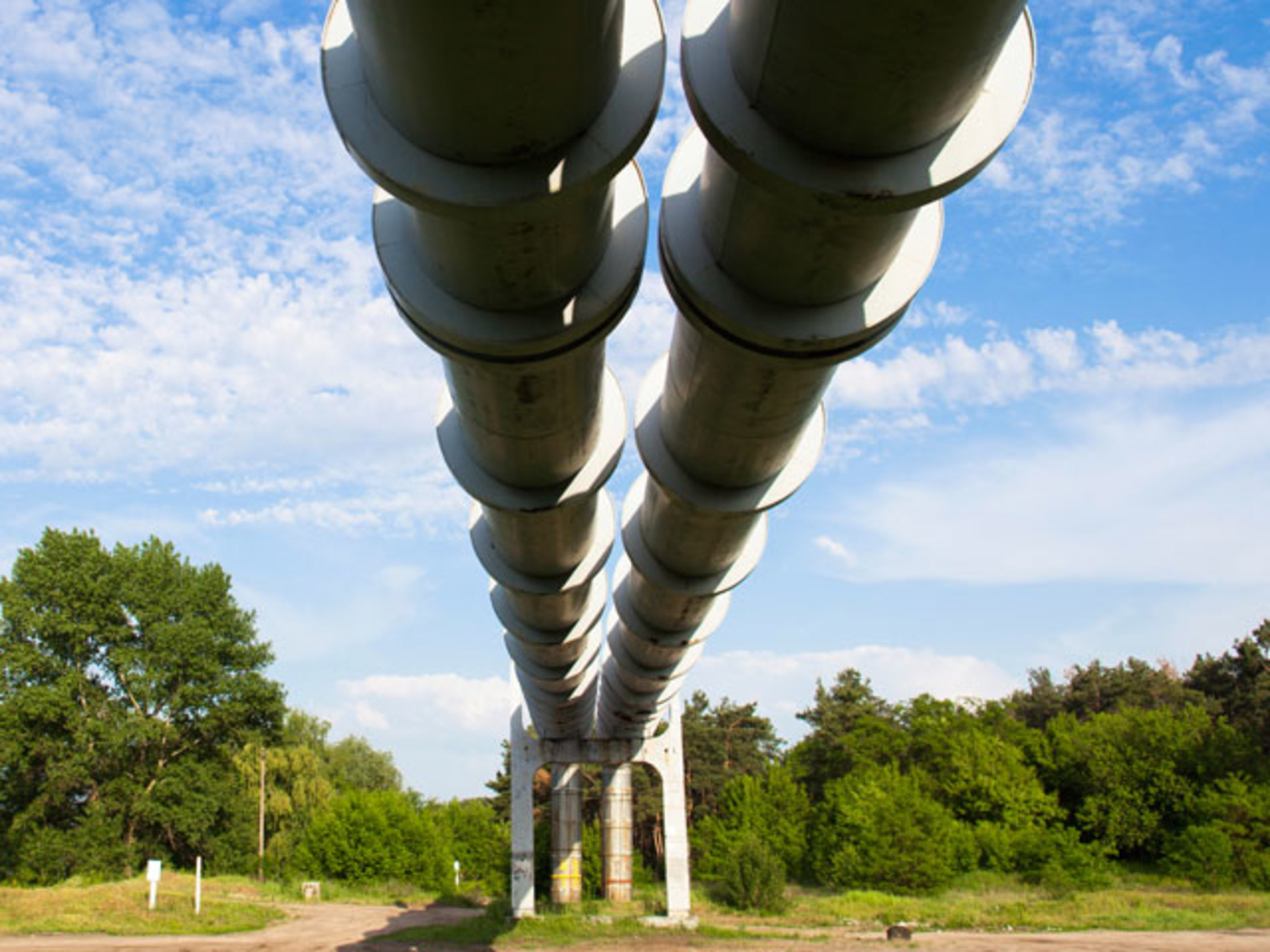
Natural gas sure gets around. According to the US Energy Information Administration (EIA), the U.S. natural gas distribution system uses more than 3,000,000 miles of transmission pipelines that connect to hundreds of storage facilities. This extensive network is capable of distributing natural gas to almost any point in the country, quickly and affordably. Learn more about what it takes to bring natural gas to your facility.
Transmission system
An elaborate network of pipelines and equipment transmits natural gas from production to areas of high demand. These transmission lines form a complex highway of natural gas, traveling at very high pressure.
Transmission pipelines vary in size, depending on the function. There are three major types:
- Gathering systems use low-pressure, small-diameter pipelines to transport raw natural gas from wells to processing facilities.
- Intrastate pipelines carry gas from processing plants to distribution centers within one state.
- Interstate pipelines carry gas from processing plants to distribution centers between states.
Though technically similar, intrastate and interstate pipelines are often subject to different regulations.
The transmission system includes infrastructure that guides and controls the flow of natural gas:
- Compressor stations use turbines, engines or electric motors to maintain high pressure as the natural gas moves through transmission pipelines.
- Metering stations measure the flow of natural gas so that it can be monitored and managed as it moves.
- Ground valves control the flow of gas in the pipelines.
Storage
Once natural gas reaches its destination, some of it is injected into underground storage facilities. Storage is critical to maintaining adequate supplies. Excess natural gas delivered during the summer months is stored in base-load facilities to ensure adequate supply and price control during the heating season.
Peak-load storage facilities help meet short-term supply interruptions or demand increases. These facilities can deliver smaller amounts of gas more quickly than base-load units and are easily replenished. For the latest statistics in storage capacity, see the U.S. Department of Energy's Weekly Natural Gas Storage Report.
There are three main types of underground storage facilities:
- Depleted gas reservoirs are geological formations that no longer contain recoverable natural gas
- Aquifers are permeable, water-containing rock formations reconditioned to store natural gas
- Salt caverns refitted for storing peak-load natural gas
In addition to underground storage, liquefied natural gas is also used to meet demand.
Distribution
Distribution is the final leg of the journey. The natural gas is scrubbed, filtered and depressurized at the transmission delivery point (city gate) prior to distribution. Because natural gas is odorless, mercaptan, a strong, sulfur-smelling chemical, is added to make leak detection easier.
Local distribution companies (LDCs) deliver gas to end-users at various points along the transmission system. These LDCs may be investor-owned or publicly owned gas systems managed by local governments. Through this process, smaller volumes of gas at much lower pressure are transmitted through smaller pipelines.
State utility commissions regulate local distribution companies, as well as distribution lines and intrastate pipelines. Some states allow gas marketers and service companies to provide the delivery of natural gas, although local distribution companies typically oversee and manage the delivery infrastructure.